Grazing
A low angle lets small changes in a surface become part of the room’s character.
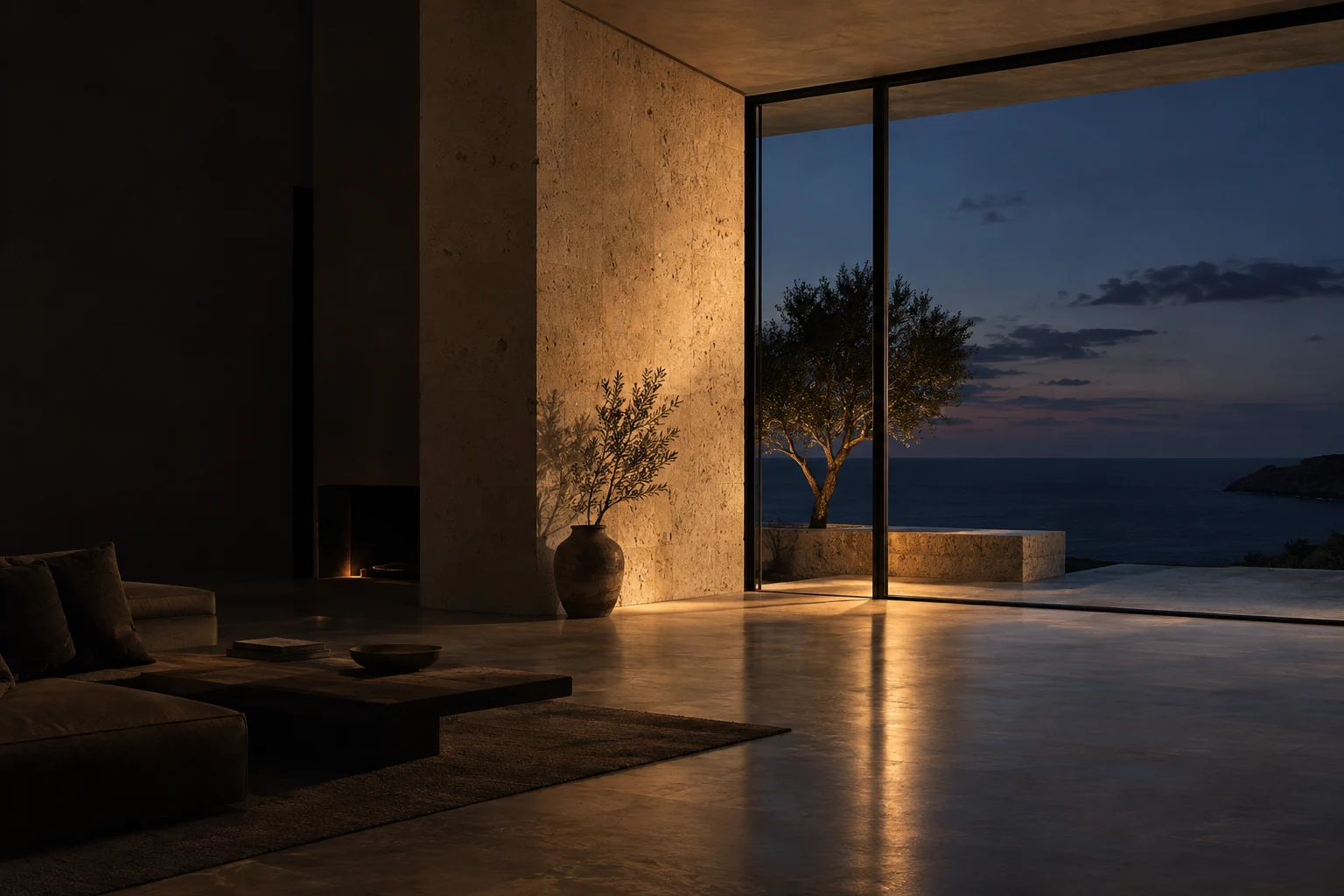
We shape the quiet dialogue between architecture, material and light — creating spaces that stay with you long after the sun goes down.
↓01 — 04We believe the best lighting is felt before it is seen.
It makes a room exhale. It gives texture a voice, draws the eye without asking, and lets darkness keep its place.
A little about us ↗Follow the edge of a beam as it moves across stone. This live light field is rendered in your browser with WebGPU; move your cursor through the frame and watch the atmosphere respond.

A low angle lets small changes in a surface become part of the room’s character.
Light returned by stone and timber softens the boundary between bright and quiet.
Restraint gives the eye somewhere to pause, and the architecture room to breathe.
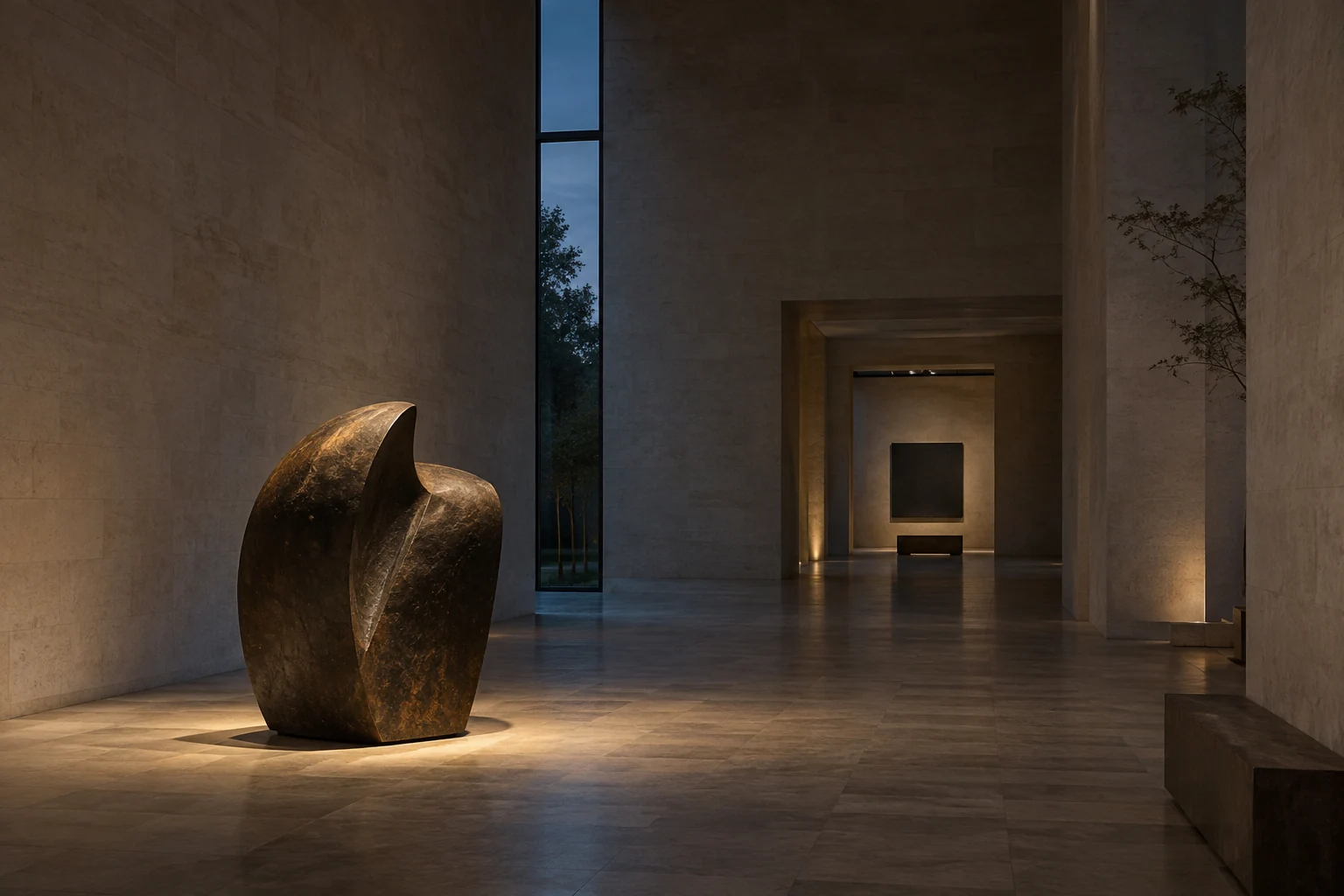
A threshold. A shadow. The warmth on a wall as evening arrives. We design with the whole experience in mind — not only what is illuminated, but what is left beautifully alone.
How we work ↗Good lighting works with daylight, not against it. Move through the day to see how a layered scheme can shift from clear and quiet to warm and intimate.
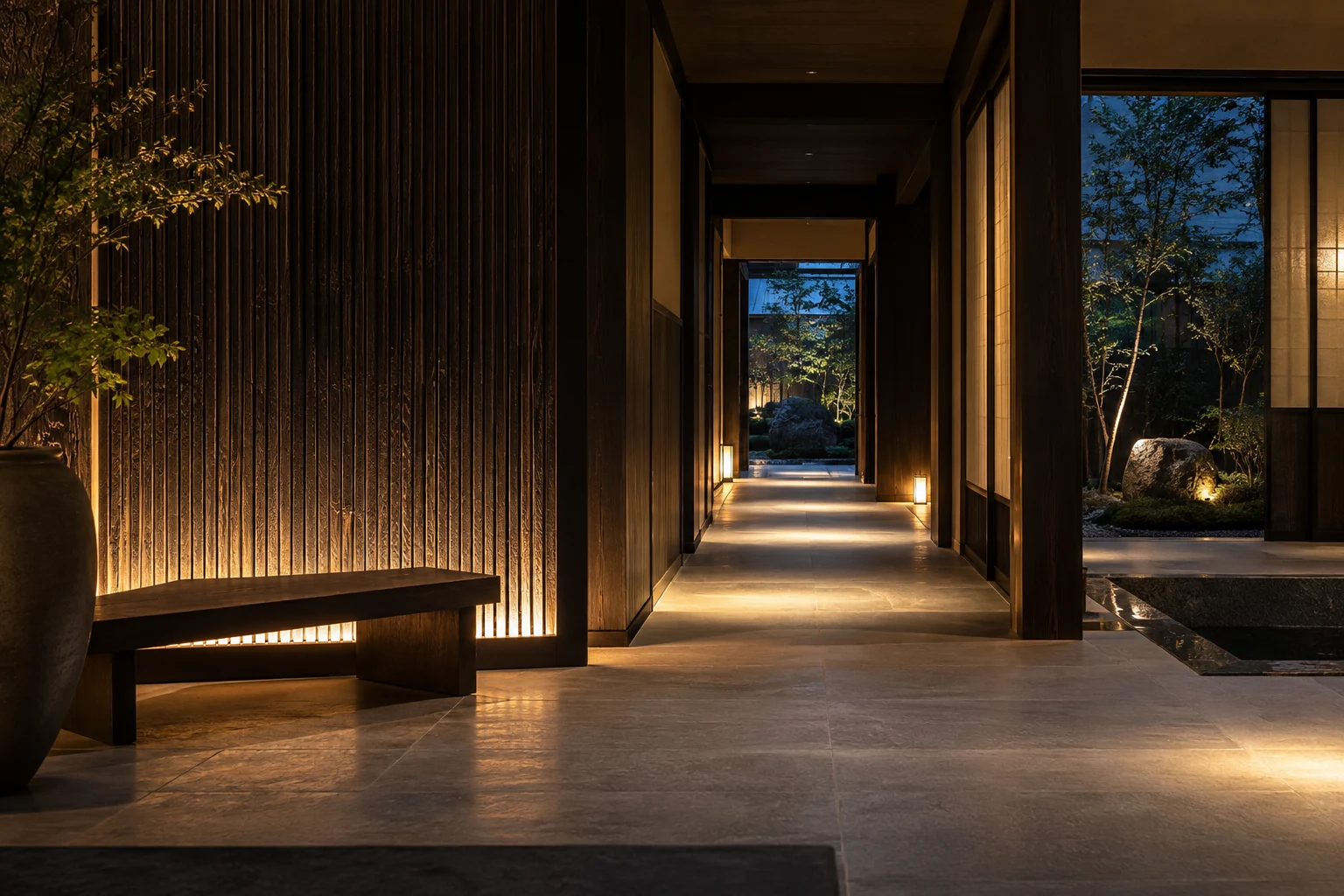
The horizon cools. Recessed sources stay hidden while a warm wash restores depth to the stone and keeps the view open.
A LAYERED SCENE / DEMONSTRATIONWe study how a surface receives, holds and returns light before we specify a single fitting.
 SAMPLE 01 / STONE
Texture appears gradually as a concealed line draws the eye across the wall.
 SAMPLE 02 / METAL
A narrow beam holds the form, with glare kept outside the viewing angle.
 SAMPLE 03 / TIMBER
Soft ambient light keeps the grain legible without flattening its depth.
Early direction, spatial narratives, daylight studies and a shared language for the project.
Carefully resolved layouts, controls and specifications, made to serve the architecture.
Mock-ups, aiming and commissioning support that carries the intent through to the final scene.
The work is most useful when it starts early and stays close to the people shaping the architecture.
We learn the brief, the way the space will be used, the materials in play and the daylight it already receives.
Lighting narratives and early studies turn an atmosphere into something the whole team can discuss.
We coordinate the design with the architecture, interiors, services and controls before it reaches site.
On-site focusing and scene tuning bring the scheme into balance with the built material and real use.
A considered scheme makes room for different tasks, rhythms and states of mind. Each layer has its own work to do; together they make the room feel whole.
Soft, even light that lets you arrive and understand the space without announcing itself.
Focused light placed around reading, preparing, gathering and the details of daily use.
A measured highlight that brings a piece of art, a textured wall or a threshold into focus.
“The room is not completeLIGHTWELL STUDIO · WORKING NOTE № 01
until the light arrives.”
We are an independent lighting design practice working alongside architects, interior designers and clients who care about the feel of a place.
Our role is to hold the lighting idea with care while the project moves through its many hands. We translate intent into details people can build, question and refine — keeping conversation open between the first sketch and the final focus.
Every project begins differently. Some start with a material sample in late afternoon sun. Others begin with a difficult brief, a challenging ceiling or the simple desire to make a room feel more generous. We meet the work where it is.
Meet the studio ↗Look closely before proposing more.
Keep the detail in conversation with the site.
Let people, materials and shadows be present.
Why shadow is an active part of the lighting plan.
Testing low-angle light across a hand-finished surface.
Colour temperature is a feeling before it is a number.
Every brief is different. These are useful starting points for a first conversation.
Ask us something ↗As early as possible. Early involvement lets lighting work with the architecture, ceiling coordination, material decisions and daylight strategy instead of being added after those choices are fixed.
Yes. Existing conditions can be a strong starting point. We review what is already there, identify what should be kept, and develop a scheme that fits the building and the way it will be used next.
A short project description, a plan if one exists, a rough programme and a few words about how you want the place to feel are enough to begin. Early ideas do not need to be resolved.
We can stay involved through coordination, mock-ups, focusing and scene refinement. The right level of site support is agreed around the project’s size, location and delivery team.
Collaboration is central to the process. Lighting decisions are coordinated with architecture, interiors, landscape, electrical engineering and the people responsible for building and operating the space.